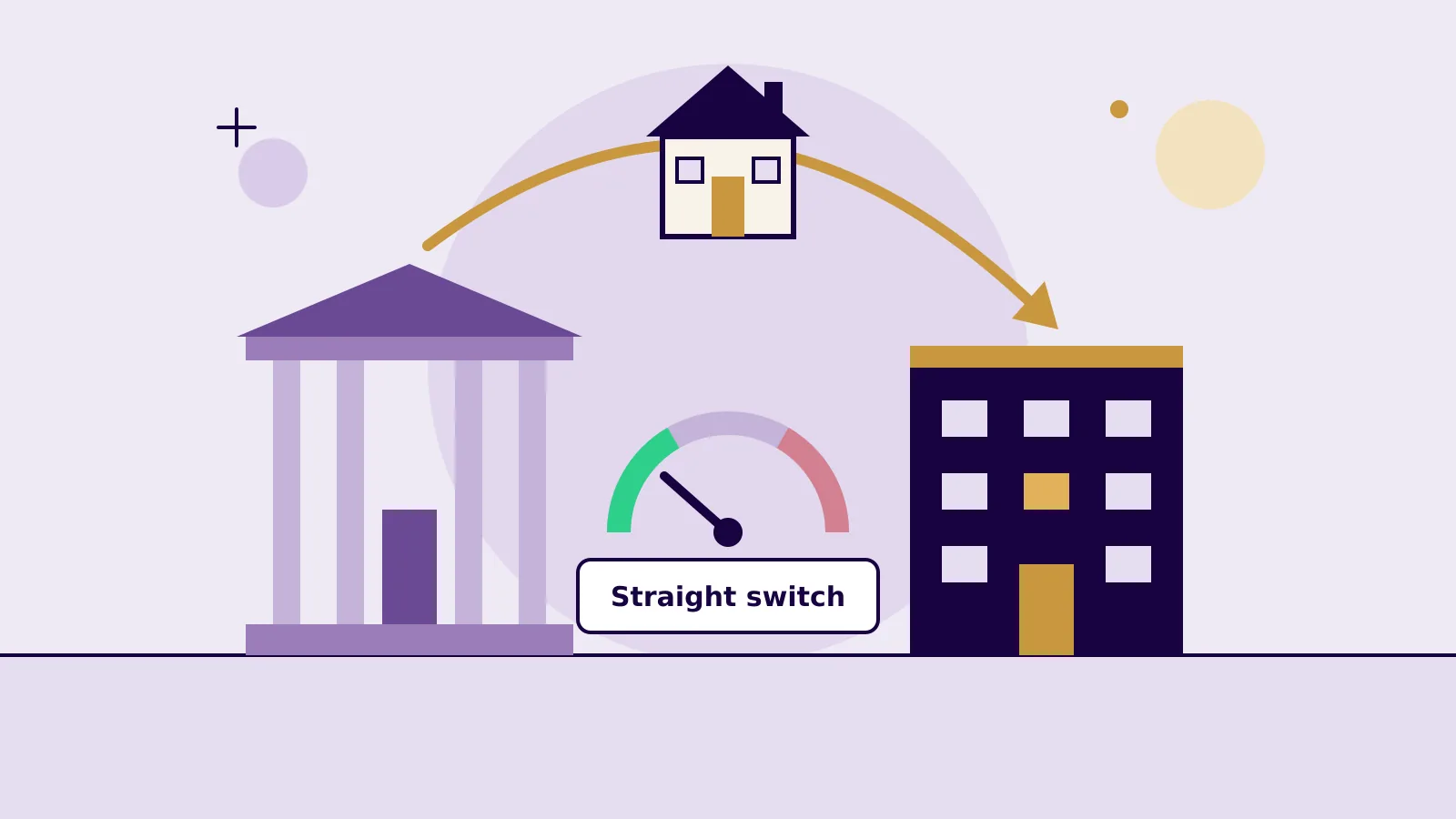
If your mortgage is up for renewal, you can usually move it to a new lender without passing the stress test again, as long as it's a "straight switch": same balance, same remaining amortization, no extra money. That rule has been in place since late 2024, but I still meet homeowners who sign their bank's renewal letter because they assume they won't requalify somewhere else. With rates higher after October's hike and delinquencies at a 13-year high, it's worth knowing exactly where the line is.
What the rules actually say
The stress test, officially the minimum qualifying rate, checks that you could afford your payment at the greater of your contract rate plus 2% or 5.25%. OSFI still sets it at those levels for uninsured mortgages. But there are two carve-outs for renewals:
- Uninsured mortgages (you put 20% or more down): since November 21, 2024, OSFI says federally regulated lenders don't need to apply the qualifying rate when you move a mortgage from one federally regulated lender to another with no increase in the loan amount or the remaining amortization.
- Insured mortgages (CMHC, Sagen or Canada Guaranty): insured borrowers could already switch at renewal without requalifying. Since December 16, 2024, Ottawa has also dropped the stress test for low-ratio (up to 80% loan-to-value) mortgages that switch from a federally regulated lender to any new lender at renewal.
In both cases, the balance can go up by at most $3,000 to cover things like fees or a penalty. Equity take-out isn't allowed. If you add money, stretch the amortization, or add a line of credit, it's a refinance, and the full stress test is back.
The catches I see most often
- Where your mortgage sits now matters. The uninsured exemption is for moves between federally regulated lenders. If your mortgage is with a provincially regulated lender, such as an Ontario credit union, ask before you assume you're exempt.
- It's not a free pass. The new lender skips the higher qualifying rate, but in my experience it still checks your credit, income and property. A missed payment or a big drop in income can still be a problem.
- Collateral charges and HELOC combos. OSFI's exemption covers stand-alone, amortizing mortgages. If yours is bundled with a readvanceable line of credit, the switch may need a different approach.
- Timing. Start 120 days out. Many lenders hold a rate for about that long, and a switch needs an appraisal and a lawyer, so starting late can leave you signing the renewal letter by default.
A GTA example: stay with the bank, or switch to a monoline?
The scenario: A homeowner in North York or Pickering owes $480,000, has 20 years left on the amortization, and is renewing into a 5-year fixed. Their bank's renewal letter offers 5.24%. A monoline lender like RFA (a lender that only does mortgages, sold through brokers) would take the mortgage as a straight switch at an assumed 4.79%.
The rate isn't the only difference. How each lender calculates a penalty if you break the new term early matters too, and I covered that in detail in my prepayment penalty post:
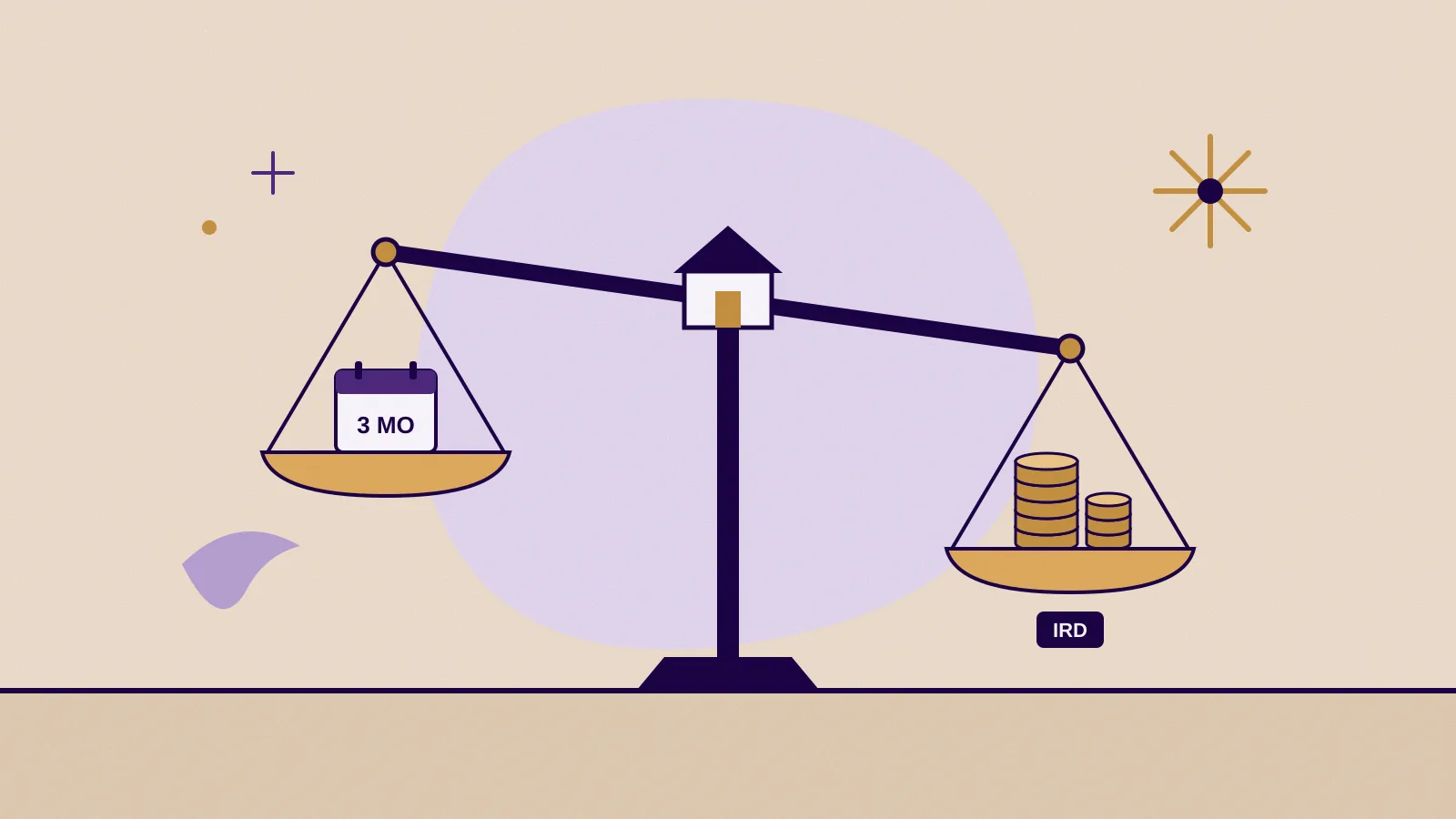
- A big bank often calculates its interest rate differential (IRD) using today's posted rate minus the discount you got when you signed. Big discount at signing, bigger penalty later.
- A monoline like RFA typically compares your rate with its own current rate for the remaining term, with no discount subtracted, so the IRD tends to be smaller. RFA Bank of Canada describes itself as a federally regulated Schedule I bank, so an uninsured straight switch to it falls under OSFI's exemption.
| Stay: big bank renewal at 5.24% | Switch: monoline at 4.79% | |
|---|---|---|
| Monthly payment | about $3,217 | about $3,100 |
| Interest paid over 5 years | about $114,890 | about $104,730 |
| Balance after 5 years | about $401,890 | about $398,730 |
| Penalty method if broken early | Posted rate minus your original discount | Your rate vs. its current rate, no discount subtracted |
| Estimated penalty if broken after 3 years | about $6,450 (IRD) | about $5,190 (three months' interest) |
| Payment at the stress-test rate, if it applied | not needed to renew | about $3,634 at 6.79%, but not required for a straight switch |
Calculation basis: $480,000 balance, 20-year remaining amortization, monthly payments, Canadian semi-annual compounding. Both rates are assumptions for illustration, not offers; RFA's published 5-year fixed rates ranged from 4.64% to 5.29% depending on product and loan-to-value as of November 18, 2026, and change often. Penalty estimate assumes the bank's posted 5-year rate was 6.49% at renewal (a 1.25% discount), its posted 2-year rate is 5.75% when you break, the monoline's 2-year rate is unchanged at 4.79%, and the penalty is the higher of three months' interest or the IRD on the remaining balance (about $435,600 at the bank, $433,560 at the monoline). Illustrative only, OAC. Legal, appraisal and discharge costs aren't included; ask who pays them.
On these assumptions, switching saves about $117 a month and roughly $10,160 in interest over the term, and leaves the balance about $3,160 lower. Look at the last row, too: at the stress-test rate, the payment used to qualify would be about $534 a month higher than the real one. For a straight switch, the new lender doesn't have to test you at that level. That's the borrower the rule was written for.
The bank may well match a better rate if you ask. In my experience, the first renewal letter is rarely the best number a lender will give you, and a competing offer is the easiest way to find out.
Who this affects
- Anyone renewing in the next four months, especially if the renewal letter just arrived.
- Homeowners whose income dropped or whose debts went up since they bought, who assume they're stuck with their current lender.
- Self-employed borrowers whose declared income looks different from when they first qualified. My self-employed mortgage page covers how lenders read that income.
- Owners who want to borrow more. Adding money turns a switch into a refinance, with full requalification.
What to do now
- Find your maturity date and your current lender's legal name. Both are on your annual statement. The name tells you whether it's federally regulated.
- Don't sign the renewal letter right away. Get at least one competing offer first.
- Keep it a straight switch if you want to skip the stress test: same balance (plus up to $3,000 for costs) and same remaining amortization.
- Ask about the penalty method on any new mortgage before you sign, not after.
- If payments are already tight, talk to your lender early. I explained the options in this post on falling behind. And with the December 9 Bank of Canada decision coming, don't wait for the last week to lock a rate.
If your renewal letter has arrived, send me your balance, rate and maturity date and I'll tell you whether a straight switch is possible and what it would actually save you.
Information current as of November 25, 2026; rates and rules change.
Sources
- OSFI: Minimum qualifying rate for uninsured mortgages (modified January 29, 2026; accessed November 25, 2026)
- OSFI: Uninsured mortgage straight switches exempt from the prescribed MQR (November 21, 2024; accessed November 25, 2026)
- Department of Finance Canada: "Straight Switches" and portfolio insurance (December 16, 2024; accessed November 25, 2026)
- Department of Finance Canada: New action to lower the cost of housing (November 19, 2024; accessed November 25, 2026)