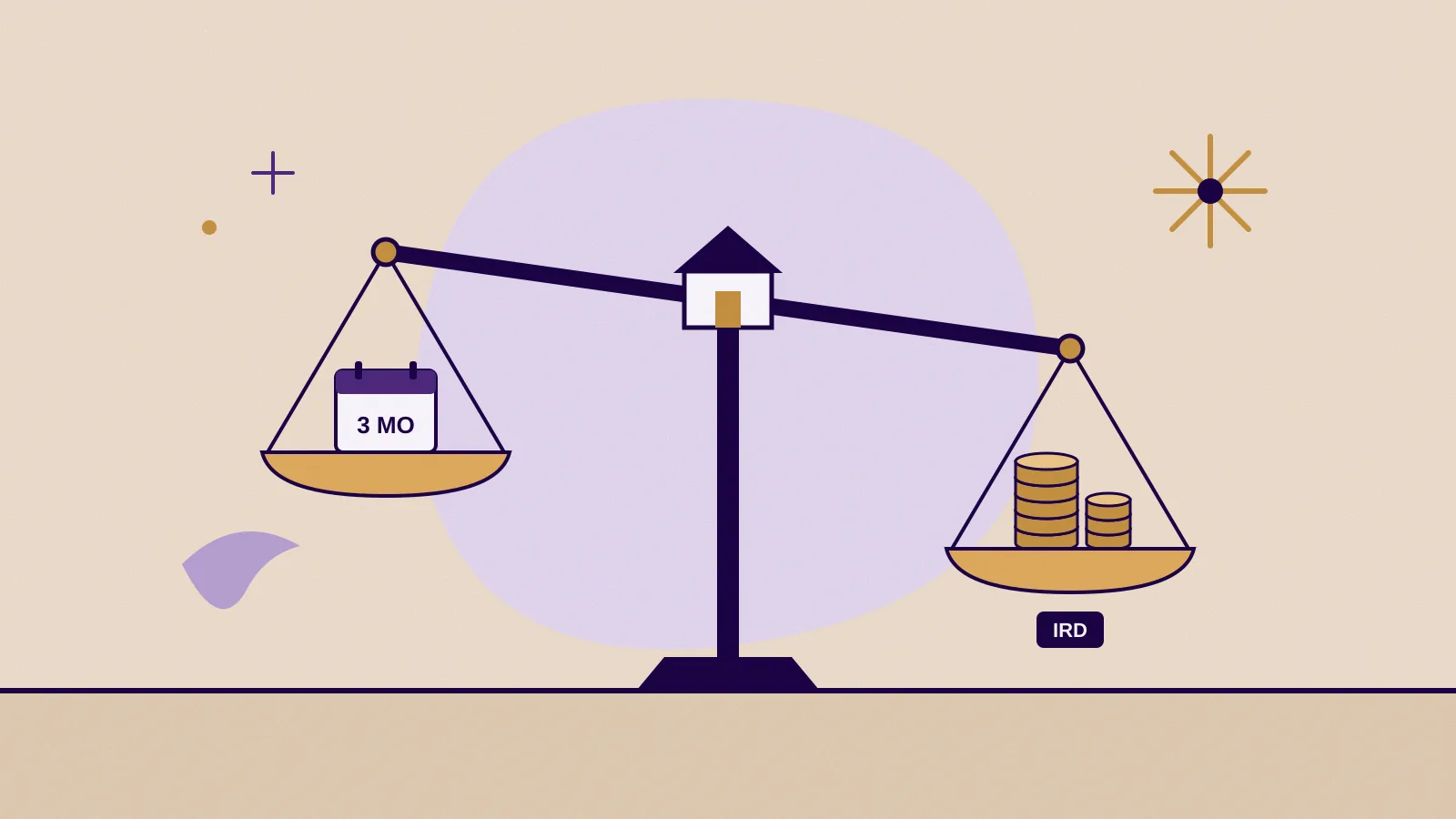
If you break a mortgage before the term ends, whether to sell, refinance or switch lenders, your lender will usually charge the higher of three months' interest or an interest rate differential (IRD). On a fixed-rate mortgage, the IRD is often the bigger number, and how your lender calculates it can swing the penalty by thousands of dollars. This month's federal budget says Ottawa will consult on making these penalties easier to understand and compare, but nothing has changed yet.
The two ways a penalty is calculated
The Financial Consumer Agency of Canada (FCAC) explains that a prepayment penalty is usually the higher of:
- Three months' interest on the balance you still owe, or
- The interest rate differential (IRD): roughly, the interest the lender loses over the rest of your term because rates today are lower than your rate.
According to the FCAC, lenders will usually use the IRD when your mortgage rate is higher than the current rate and you signed less than five years ago. In my experience, most variable-rate mortgages charge three months' interest, but your contract is what counts, so read it.
The part most borrowers never see is the comparison rate. The FCAC lists the options lenders may use: your contract rate or the posted rate when you signed, compared with today's posted rate for a similar remaining term, or today's posted rate minus the discount you originally received. That last method is where penalties get large.
A GTA example: same mortgage, three different penalties
Say you're in Scarborough or Mississauga with a $600,000 balance on a 5-year fixed at 4.50%, and you have 36 months left. Assume the lender's posted rate for a 3-year term today is 5.50%.
| How the lender calculates it | Comparison rate | Estimated penalty |
|---|---|---|
| Three months' interest | n/a | about $6,700 |
| IRD, today's posted rate minus your original 1.50% discount | 4.00% | about $9,000 |
| IRD, today's posted rate minus your original 2.00% discount | 3.50% | about $18,000 |
| IRD, your 4.50% contract rate vs. today's 5.50% posted rate | 5.50% | no IRD, so three months' interest: about $6,700 |
Calculation basis: $600,000 balance, 4.50% contract rate, 36 months remaining, assumed 5.50% posted 3-year rate, semi-annual compounding. IRD shown as the rate difference × balance × 3 years; a schedule-based calculation on a 23-year remaining amortization gives nearly the same result (about $9,000 and $17,900). Rates here are assumptions for illustration, not current offers. Illustrative only, OAC. Your lender's actual method, rates and any admin or discharge fees will change the number.
Look at rows two and three. Same balance, same rate, same time left. The only difference is how big a discount you got off the posted rate when you signed. Under the "posted minus discount" method, a bigger discount at signing can mean a bigger penalty when you leave. That's why I say the rate is only half the mortgage. The penalty clause is the other half.
What the budget proposes, and what it doesn't
Budget 2026 says the government intends to "consult industry and stakeholders on potential reforms" to make prepayment penalties more transparent, so Canadians can understand and compare the cost of paying a mortgage off early. It covers insured mortgages and sets no timeline. There's no cap on penalties and no new formula. The same section also proposes better public data on insured mortgage rates from the Bank of Canada. I covered the budget's insurance change for $1M+ homes in this earlier post.
Two protections already exist. Federally regulated lenders must tell you how they calculate your penalty, and the key terms must appear in the information box at the start of your mortgage agreement. And under section 10 of the federal Interest Act, on a mortgage with a term longer than five years, an individual borrower who pays it off after the fifth anniversary can't be charged more than three months' extra interest. That matters if you took a 7- or 10-year term.
Who this affects
- Anyone selling before their term ends, especially if the new home's closing doesn't line up with porting.
- Homeowners thinking about refinancing to consolidate debt or pull out equity for a renovation.
- Fixed-rate borrowers tempted to break and re-lock after October's hike, worried about the December 9 Bank of Canada decision.
- Separating couples where one spouse needs to buy out the other.
What to do now
- Get the penalty in writing. Call your lender and ask for the exact payout figure and the method they used. Online calculators are a starting point, not the answer.
- Use your prepayment privileges first. The FCAC notes that prepaying within your annual allowance lowers the balance the penalty is calculated on. Some lenders restrict this close to a payout, so ask before you count on it.
- Ask about porting or a blend-and-extend. If you're buying another home, porting can move your existing rate and terms to it. Some lenders will also blend your current rate with a new one instead of charging a penalty.
- Check how close you are to renewal. If you're within a few months, waiting may cost less than breaking. My renewal page explains how to use that window.
- Compare alternatives. If you need equity, a HELOC or second mortgage can sometimes leave your first mortgage, and its penalty, untouched.
- Read the penalty clause on your next mortgage. At renewal or purchase, ask how the IRD is calculated before you sign, not after.
If you're weighing a refinance or an early switch, send me your balance, rate and maturity date and I'll compare the penalty against what you'd actually save, so you can decide with real numbers.
Information current as of November 22, 2026; rates and rules change.
Sources
- Financial Consumer Agency of Canada: Mortgage fees, prepayment penalties (modified October 15, 2025; accessed November 22, 2026)
- Budget 2026, Chapter 3: A more affordable life (accessed November 22, 2026)
- Interest Act, section 10 (current to October 29, 2026; accessed November 22, 2026)