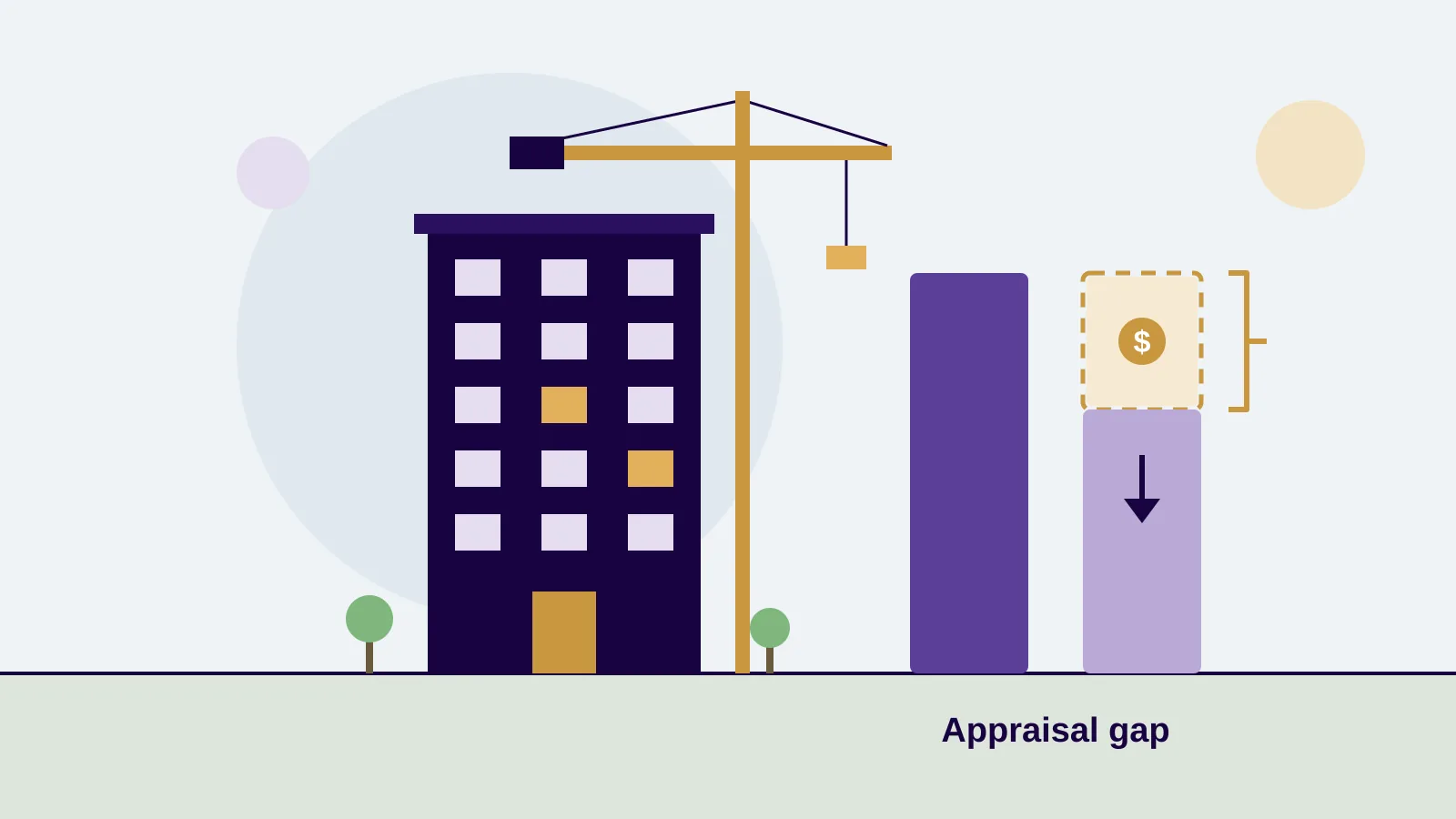
If you bought a pre-construction condo in Vaughan a few years ago and it's now close to final closing, your lender will likely lend on the lower of your purchase price or today's appraised value. With Vaughan condo apartment values down year over year, many buyers are finding a gap between what they agreed to pay and what the bank will finance. That gap has to be covered with cash or other financing before closing day, so the time to plan is now, not the week before.
What Vaughan condo prices are doing right now
TRREB's October 2026 Market Watch shows the pressure clearly for Vaughan condo apartments:
- 57 sales in October, at an average price of $538,647 and a median of $520,000.
- The MLS® Home Price Index benchmark for a Vaughan apartment was $504,900, down 6.51% from a year earlier. Across York Region, the apartment benchmark was down 9.32%.
- There were 419 active listings at month end against those 57 sales, and units sold at about 96% of asking price after an average of 42 days on the market.
That's a lot of supply for buyers to choose from, and appraisers look at recent comparable sales in the same building and nearby towers. When resale units in your area are selling for less than your contract price, the appraisal usually follows.
How the appraisal gap works on closing day
Your deposit, often paid in instalments over the first year or two, already sits with the builder's lawyer in trust. At final closing you owe the balance of the price plus closing adjustments. The mortgage covers most of that balance, but most lenders base the loan on the appraised value when it's lower than the price you paid. The difference between price and appraisal comes out of your pocket.
A Vaughan example with real numbers
The scenario: In 2022 you agreed to buy a one-bedroom-plus-den near the Vaughan Metropolitan Centre for $650,000 (an assumed price for this example) and paid a 20% deposit of $130,000. Today the unit appraises at $540,000, close to October's Vaughan condo average.
| If it appraised at the purchase price | Appraises at $540,000 | |
|---|---|---|
| Value the lender uses | $650,000 | $540,000 |
| Mortgage at 80% of that value | $520,000 | $432,000 |
| Equity you need at closing (price minus mortgage) | $130,000 | $218,000 |
| Already paid as deposit | $130,000 | $130,000 |
| Extra cash needed at closing (before closing costs) | $0 | $88,000 |
| Monthly payment, first mortgage | about $2,962 | about $2,461 |
If that $88,000 came from a private second mortgage, interest-only at an assumed 9%, it would add about $660 a month on top of the first mortgage, plus lender and legal fees. That can work as a short bridge, but it's expensive to carry for long.
Calculation basis: $650,000 assumed purchase price, $540,000 assumed appraisal, 80% loan-to-value conventional mortgage, assumed 4.79% 5-year fixed rate, 25-year amortization, monthly payments with Canadian semi-annual compounding. Private second mortgage shown at an assumed 9% interest-only. These rates are assumptions for illustration, not offers. Excludes land transfer tax, legal fees, occupancy fees and adjustments. Illustrative only, OAC.
Your options if the numbers don't line up
- Bring more cash. Savings, a gift from family, or proceeds from selling another property. Lenders will want to see where the money came from.
- Use equity in a home you already own. If you own a house elsewhere in the GTA, a HELOC or refinance on that property may be cheaper than private money. Compare a HELOC vs. a second mortgage.
- Look at a longer amortization. If you'll live in the unit, an insured mortgage on a newly built home can use a 30-year amortization, which lowers the payment. I covered the rules in this post on longer amortizations.
- Short-term private or B-lender financing. A private mortgage can close the gap so you don't lose your deposit, with a plan to refinance into a regular mortgage later.
- Talk to the builder. Some builders offer credits or extended closing options. Get anything they promise in writing and have your real estate lawyer review it.
One thing I'd avoid: assuming the problem goes away if you walk. Your deposit is at risk, and the builder may also pursue you for its losses on resale. Talk to your lawyer before you decide anything.
Check the HST rebates, but read the dates
Two newer rebates can lower your cost on a new home, but many Vaughan units closing now were signed years ago, before these windows opened:
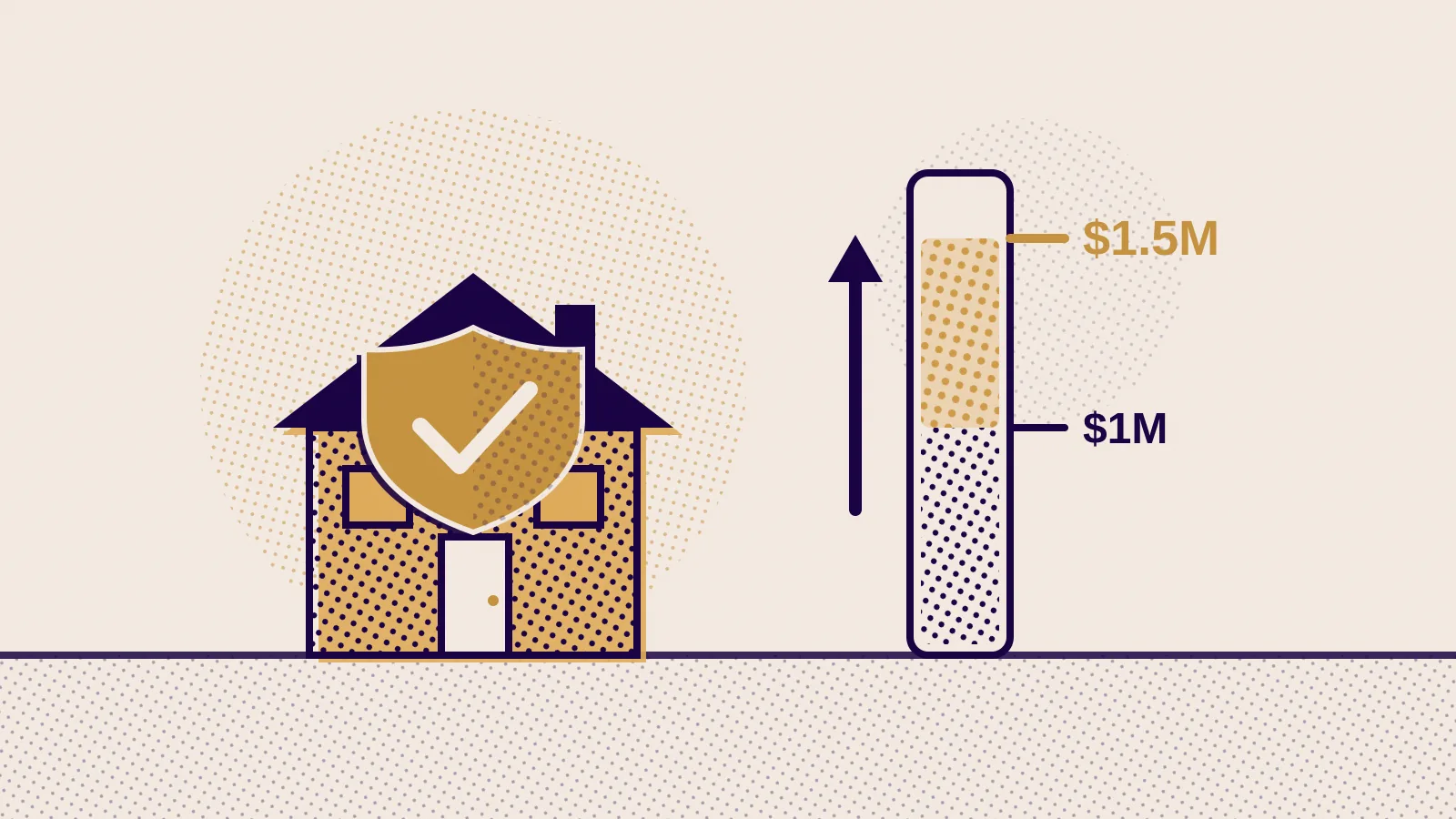
- The federal First-Time Home Buyers' GST/HST rebate is worth up to $50,000 for eligible first-time buyers, for agreements entered into on or after March 20, 2025. It phases out between $1 million and $1.5 million.
- Ontario's enhanced new housing rebate covers agreements signed from April 1, 2026, to March 31, 2027. The CRA says a pre-April 2026 agreement that's later assigned or amended is treated as signed before April 1, 2026 for this rebate.
If you bought by assignment recently, ask your lawyer which rebates you qualify for before you count them in your closing budget.
Who this affects
- Buyers who signed for Vaughan condos in 2021 to 2023 with closings in the next 6 to 18 months.
- Investors who planned to rent the unit and now face lower rents and a smaller mortgage.
- Buyers whose income or credit changed since signing and who may no longer qualify at a big bank.
What to do now
- Find your expected closing date and check your builder's notices. Occupancy and final closing can be months apart.
- Get an early estimate of value. Look at recent sales of similar units in your building and nearby towers, not asking prices.
- Get pre-qualified 6 to 9 months before closing. A pre-approval shows what you can borrow today, not what you could borrow when you signed.
- Line up a gap plan. Cash, equity from another property or a short private bridge. Know the cost of each before closing week.
- Keep your credit clean. Avoid new car loans or credit lines before closing.
If you're closing on a Vaughan or York Region condo and worried about the appraisal, reach out to my York Region team. Send me your purchase price, deposit and closing date and I'll map out what you'll need and the cheapest way to cover it.
Information current as of November 23, 2026; rates and rules change.
Sources
- TRREB Market Watch, October 2026 (released November 4, 2026; accessed November 23, 2026)
- Canada Revenue Agency: First-time home buyers' (FTHB) GST/HST rebate (modified June 16, 2026; accessed November 23, 2026)
- Canada Revenue Agency: GST/HST Notice 346, Ontario Enhanced New Housing Rebate (August 2026; accessed November 23, 2026)