If you buy a home inside the City of Toronto, you pay land transfer tax twice: once to Ontario and once to the City. As a first-time buyer you can get up to $8,475 back in total ($4,000 provincial plus $4,475 municipal), but on a typical Toronto condo you will still owe roughly $10,900 in cash on closing day.
That cash cannot be added to your mortgage. It has to come from your own savings, on top of your down payment. This is one of the most common surprises I see with first-time buyers in Toronto, so let's put real numbers on it.
Two taxes, two rebates
Ontario land transfer tax applies to every purchase in the province. For a home with one or two single-family residences, the rates step up from 0.5% on the first $55,000 to 2.0% on the portion between $400,000 and $2,000,000, and 2.5% above $2,000,000.
Toronto's Municipal Land Transfer Tax (MLTT) uses the same brackets up to $2,000,000, so for most buyers it roughly doubles the bill. Above that it diverges: 2.5% up to $3,000,000, and since April 1, 2026, graduated luxury rates from 4.40% (over $3 million) up to 8.60% (over $20 million).
Buy just outside the city line, in Mississauga, Vaughan or Pickering, and you pay only the Ontario tax. On the same $660,000 condo, that difference is about $5,200 for a first-time buyer.
The two first-time buyer rebates:
- Ontario refund: up to $4,000, which covers the full provincial tax on the first $368,000 of the price.
- Toronto MLTT rebate: up to $4,475, which covers the full municipal tax on the first $400,000.
Above those amounts you pay the full rate. In a city where the average condo apartment sold for $659,214 in October, almost every first-time buyer is above them.
What you pay at October 2026 Toronto prices
TRREB's October 2026 Market Watch puts the City of Toronto's average condo apartment price at $659,214, the composite benchmark price at $908,800 and the average detached price at $1,603,886. Here is the land transfer tax at prices close to those figures:
| Purchase price | Ontario + Toronto tax | First-time buyer rebates | Cash due on closing |
|---|---|---|---|
| $660,000 (condo) | $19,350 | −$8,475 | $10,875 |
| $910,000 (benchmark home) | $29,350 | −$8,475 | $20,875 |
| $1,600,000 (detached, repeat buyer) | $56,950 | none | $56,950 |
Calculation basis: Ontario and City of Toronto rates for a property with one or two single-family residences, as published by Ontario.ca and the City of Toronto; full rebates assumed for buyers who meet every eligibility rule. Excludes legal fees, title insurance, adjustments and other closing costs. Illustrative only, OAC; your lawyer confirms the final amount.
Notice the rebate is fixed. It saves $8,475 whether you buy at $660,000 or $910,000, so the more you spend, the smaller the share it covers.
Who qualifies, and where buyers trip up
Both programs share the same core rules. You must be at least 18, a Canadian citizen or permanent resident (or become one within 18 months), and move in as your principal residence within nine months. Toronto's rebate applies to both new and resale homes.
The rule that catches people: you can never have owned a home, or any interest in one, anywhere in the world. That includes a property overseas, or being on title to a parent's home. Your spouse matters too. Under Ontario's rules, if your spouse owned a home while you were together, no refund is available to either of you.
If you are buying with a partner or family member who has owned before, ask your lawyer how that affects the rebates before you sign, not after. Our co-buying page covers how shared purchases are structured.
Your lawyer normally claims both rebates when the deed is registered. If that doesn't happen, you can still apply afterward, but both programs require the application within 18 months of the transfer.
Who this affects
- First-time buyers in Toronto, including Scarborough, North York and Etobicoke, who need to budget the post-rebate amount in cash.
- Repeat buyers moving up within the city, who pay both taxes in full with no rebate.
- Buyers comparing Toronto with the 905, where only the provincial tax applies.
What to do now
- Work out your tax before you shop. Use your target price and the table above as a starting point.
- Keep it separate from your down payment. Lenders want proof that your closing costs are covered from your own resources.
- Check eligibility early, especially any past ownership abroad or a spouse who has owned.
- Get pre-approved with closing costs built in. A mortgage pre-approval should show your price range after land transfer tax, not before it.
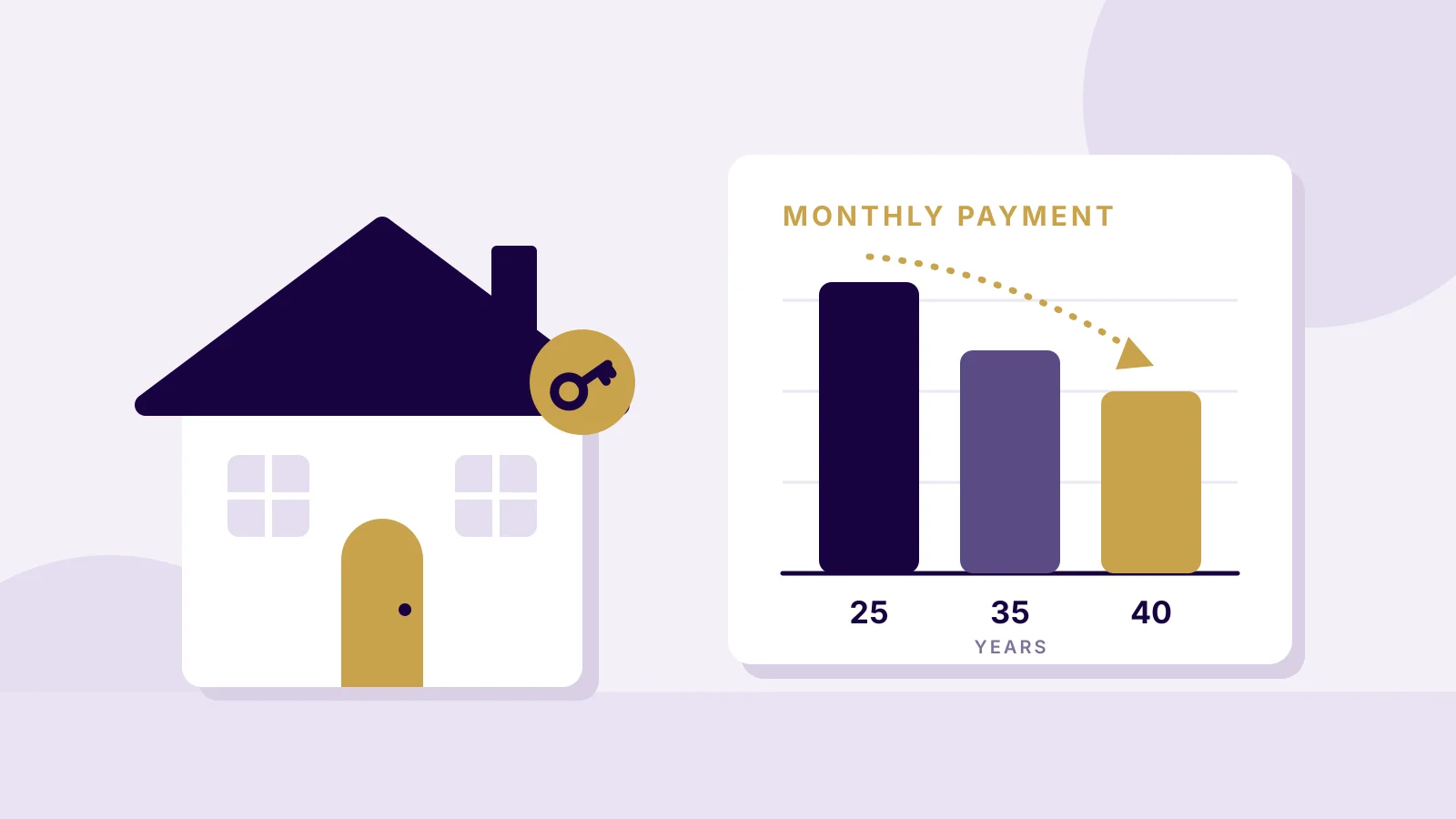
- Look at qualification tools. If cash for closing squeezes your down payment, a longer amortization can lower the payment you qualify on.
For the full picture of programs available to first-time buyers, see our first-time home buyer guide. If you are buying in the city and want your closing numbers worked out before you make an offer, talk to our Toronto mortgage team.
Information current as of November 15, 2026; rates and rules change.
Sources
- City of Toronto: MLTT rates and fees (modified April 7, 2026)
- City of Toronto: MLTT rebate opportunities (modified December 18, 2025)
- Ontario.ca: Calculating land transfer tax (updated April 22, 2026)
- Ontario.ca: Land transfer tax refunds for first-time homebuyers (updated February 10, 2026)
- TRREB Market Watch, October 2026 (released November 4, 2026)